
Is Your Driveway Telling You Something?
A cracked or sunken concrete driveway is one of the most common calls we receive from homeowners in Stuart, Port St. Lucie, Jensen Beach, and Palm City. The good news: not every damaged driveway needs to be demolished and poured new. The key is knowing how to read what the concrete is actually telling you — and understanding when a patch will hold versus when replacement is the smarter long-term investment.
This guide walks you through the most common driveway problems, honest DIY limits, and what a professional concrete driveway contractor looks for before recommending repair or full replacement.
Common Concrete Driveway Problems in the Treasure Coast
Florida’s climate puts concrete through a unique stress cycle. Heat expansion, heavy summer rain, sandy or clay-heavy soil, and the occasional vehicle overload all take their toll. Here are the issues we see most often:
Hairline and Surface Cracks
Thin cracks less than about 1/4 inch wide and running only through the surface layer are typically a cosmetic concern. Concrete naturally shrinks as it cures, and these cracks often appear within the first few years. In many cases, a polyurethane or epoxy crack filler applied by a homeowner can buy several more years of service life — provided the crack isn’t growing.
DIY threshold: A single hairline crack with no vertical displacement and no sign of widening is a reasonable DIY project. Clean out debris, apply a quality concrete crack filler rated for driveways, and monitor it over the next rainy season.
Structural Cracks and Spalling
Wider cracks — anything approaching 1/2 inch or more — or cracks that run the full depth of the slab are a different story. So is spalling, where the surface layer flakes away and exposes the aggregate underneath. These issues typically mean the slab itself has been compromised, often by poor base preparation, tree root intrusion, or years of water infiltrating and eroding the soil beneath.
Patching the surface of a structurally cracked slab is a short-term fix at best. The underlying cause — unstable base, root pressure, drainage — will keep working against any repair you apply on top.
Settlement and Sunken Panels
When one section of the driveway sits noticeably lower than an adjacent panel, that’s called differential settlement. It’s a tripping hazard, a drainage problem, and a sign that the soil underneath has shifted or eroded. In South Florida’s sandy soils, this is especially common after heavy rain events.
Settlement can sometimes be addressed with slab lifting (mudjacking or polyurethane foam injection), but those techniques work best on stable subgrades with isolated voids. If the base is broadly compromised — as often happens in areas near the St. Lucie River or along drainage swales in Port St. Lucie — replacement with properly compacted fill is the lasting solution.
Drainage Problems
A driveway that puddles or directs water toward your garage or foundation isn’t just inconvenient — it accelerates concrete deterioration and can threaten your home’s structure. Correct slope (typically 1/8 to 1/4 inch per foot away from the house) is built in during the pour. Once a slab is set, you can’t re-pitch it without replacement.
If you’re seeing standing water consistently in the same spot, that’s worth a professional eye. Sometimes adding a concrete curb or channel can redirect flow without a full tear-out. Other times, the only real fix is removing the problem section and repaving it with proper grade.
Repair vs. Replacement: A Simple Decision Framework
When homeowners in Jupiter, Palm Beach Gardens, or Stuart ask us whether to repair or replace, we walk through these factors:
- Crack width and depth: Surface-only and under 1/4 inch — repair candidate. Full-depth or wider — lean toward replacement.
- Number of affected panels: One or two isolated panels with problems — repair or selective replacement. More than a third of the driveway showing distress — full replacement usually costs less over five years than repeated patches.
- Vertical displacement: Any section that has risen or dropped more than 3/4 inch relative to adjacent concrete is a trip hazard and a structural concern.
- Age of the slab: Concrete driveways typically last 25–30 years with reasonable care. A 20-year-old slab with multiple issues is nearing end of life regardless of what you patch today.
- Drainage and grade: If water is flowing the wrong direction, patching won’t solve it. This almost always requires concrete removal and a fresh pour graded correctly from the start.
- Root intrusion: Tree roots lifting or cracking a slab will keep causing damage unless the root issue is addressed simultaneously. This is a case where our arborist and concrete teams often work together.
What a Licensed Contractor Does Differently
A licensed Florida building contractor (like Blakenstone Construction, CBC1268642) doesn’t just look at the surface. Before recommending repair or replacement, we assess the subgrade, check for voids, evaluate drainage patterns, and look at the overall condition of the slab — not just the visible damage.
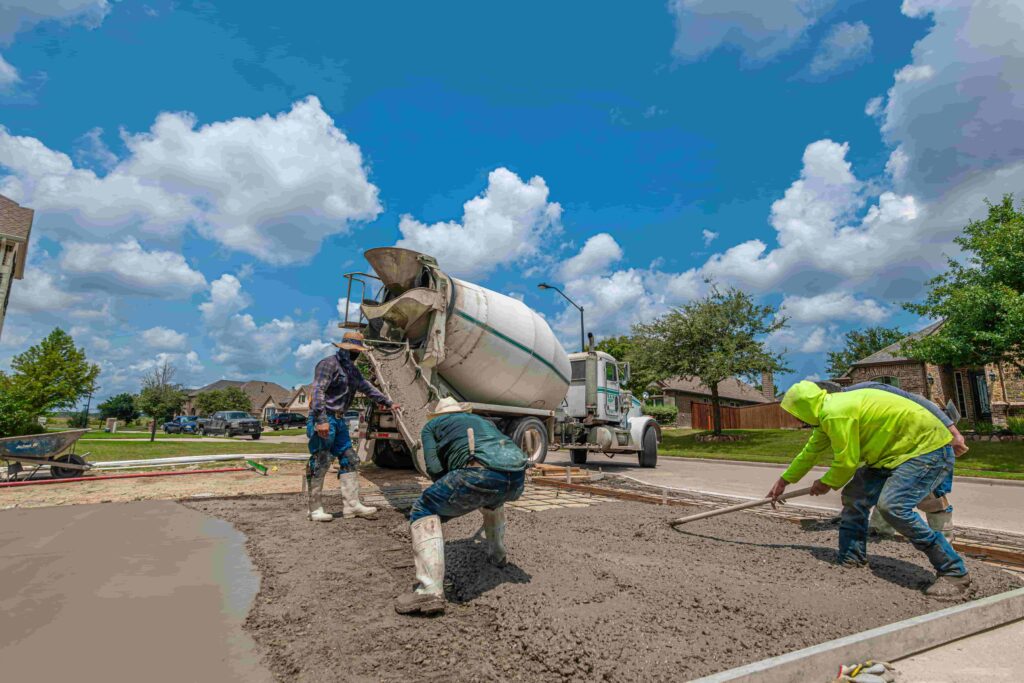
For full replacements, proper base preparation is everything. Skipping compaction steps or pouring over unstable soil is why some driveways fail in just a few years. We also ensure the new slab has proper control joints — intentional score lines that give concrete a place to crack predictably — which dramatically reduce random cracking over the slab’s life.
If your project is in Stuart, Port St. Lucie, Jensen Beach, Palm City, Hobe Sound, or anywhere on the Treasure Coast, we’re local and familiar with the soil conditions, rainfall patterns, and permitting requirements specific to Martin and St. Lucie counties.
When to Act — and When Not to Wait
Small cracks are easy to dismiss. But concrete damage is progressive: water enters a crack, erodes the base, widens the crack, and what was a $200 repair becomes a $4,000 replacement. Catching problems early almost always saves money.
That said, not every crack is an emergency. If your driveway is functional, draining correctly, and the cracks are hairline-only with no displacement, monitoring for a season is reasonable. What you shouldn’t do is patch cosmetically over structural problems and assume the job is done.
Ready for a Professional Assessment?
If you’re not sure whether your driveway needs repair or replacement, the best first step is an honest, on-site evaluation. Blakenstone Construction serves homeowners throughout Stuart, Port St. Lucie, Jensen Beach, Palm City, Hobe Sound, Jupiter, Palm Beach Gardens, West Palm Beach, and the surrounding Treasure Coast and Palm Beach County communities.
Explore our concrete driveway services or reach out to schedule a consultation. There’s no pressure — just a straightforward look at what your driveway actually needs.
Martin & St. Lucie County homeowners: Call us at (772) 222-7317 or visit our contact page to get started.